Children playing on the floor with toys, surrounded by family in a cozy living room, emphasizing indoor comfort and quality family time.

Back to School, Back Indoors: Is Your Anchorage Home’s Air Ready for Winter?

When school starts in Anchorage, something else starts too: the seven-month season where your family

breathes almost nothing but indoor air. Windows close in September and mostly stay closed until May, and

every germ the kids bring home from the classroom circulates through the same heating system, around

the clock, all winter. Fall is the one moment on the calendar when improving your indoor air is easy. Here

is what actually moves the needle in an Alaska home, and what we would skip.


Why Fall Is the Turning Point for Indoor Air

Alaska homes are built tight, and they should be. A leaky envelope at 40 below is not an option. But tight

homes trade fresh air for warmth. Once the windows close for the season, whatever is in your air stays in

your air: dust, pet dander, cooking byproducts, residue from summer wildfire smoke, and the

back-to-school cold-and-flu carousel. Anchorage families spend the vast majority of winter hours indoors,

which means your furnace filter and ventilation do more for your family’s air than anything else you own.


Start With the Filter, the Best Value in Indoor Air

Most homes run the cheapest filter on the shelf, which exists mainly to protect the furnace, not your lungs.

Stepping up to a MERV 11 to 13 filter captures the fine particles that matter, including smoke residue,

dander, and the droplet particles that carry respiratory viruses, for a few dollars more per filter. Two

caveats. First, check that your system is rated for a higher-resistance filter, because some older furnaces

are not, and a too-restrictive filter creates its own problems. Second, no filter helps if it is loaded, so

change it every one to three months during heating season, and more often with pets.


If Your Home Has an HRV, Fall Is Its Moment

Many newer Alaska homes have a heat recovery ventilator, the box that brings in fresh air without throwing

away your heat. It is also the most neglected piece of equipment we see: cores and filters clogged with

years of dust, quietly moving a fraction of the air they should. Before the windows close for the season,

HRV filters and the core need cleaning, and the unit is worth a proper service if it has never had one. If

your home does not have balanced ventilation and winter condensation on your windows is a recurring

battle, that is worth a conversation. Dripping windows are a ventilation symptom, not a glass problem.


Humidity: The Goldilocks Problem in Alaska Winters

Alaska winter air is desert-dry once heated, and families feel it: static, bloody noses, scratchy throats that

get blamed on school germs. The target range indoors is roughly 30 to 40 percent in winter. But more

humidity is not automatically better in a cold climate. Push past that range and moisture condenses on cold

windows and wall corners, and condensation is how mold starts. If you add humidity, watch your windows.

The first morning you see persistent condensation, dial it back.


What We’d Skip

You will see a lot of indoor air products marketed hard in the fall, and not all of them earn their price. Duct

cleaning is the big one. It has a real place after renovation dust, visible mold, pest problems, or if the ducts

have simply never been cleaned, but as an automatic annual service for a normal home, the evidence is

thin, and we would rather tell you that than sell it to you. Likewise, plug-in air fresheners and

ozone-generating “purifiers” add chemicals to your air rather than removing them. Filter first, ventilation

second, humidity third, in that order, before spending on anything exotic.


One More Fall Item: Carbon Monoxide

Indoor air in winter is also a safety topic, because heating season is combustion season. Test CO

detectors when school starts, replace expired units (they age out around seven years), and make sure one

is near every sleeping area. This is also the quiet argument for annual heating service: the heat exchanger

inspection in a proper tune-up is a carbon monoxide check.


Frequently Asked Questions


Will a better filter really help with school germs?

It helps; it is not a force field. High-MERV filtration removes a meaningful share of the fine droplet particles

that circulate through forced-air systems, and it pairs with ventilation and humidity in the healthy range. Dry

air also dries out the airways that are your first defense.


What about homes with boilers and baseboard heat?

No ducts means no central filter, so ventilation and humidity carry more of the load, and an HRV or a

quality portable HEPA unit in bedrooms does the filtering work instead.


How do I know if my home needs more ventilation?

Persistent window condensation, stale smells that greet you at the door, and a house that feels stuffy by

February are the classic signs of a tight home that is under-ventilated.


Want a Straight Answer on Your Home’s Air?

KLEBS has been keeping Alaskans safe and warm since 1986. Call (907) 365-2500 in Anchorage or (907)

357-HEAT (4328) in the Mat-Su Valley, or send us a service request online. We’ll tell you what your home

actually needs, and what it doesn’t.
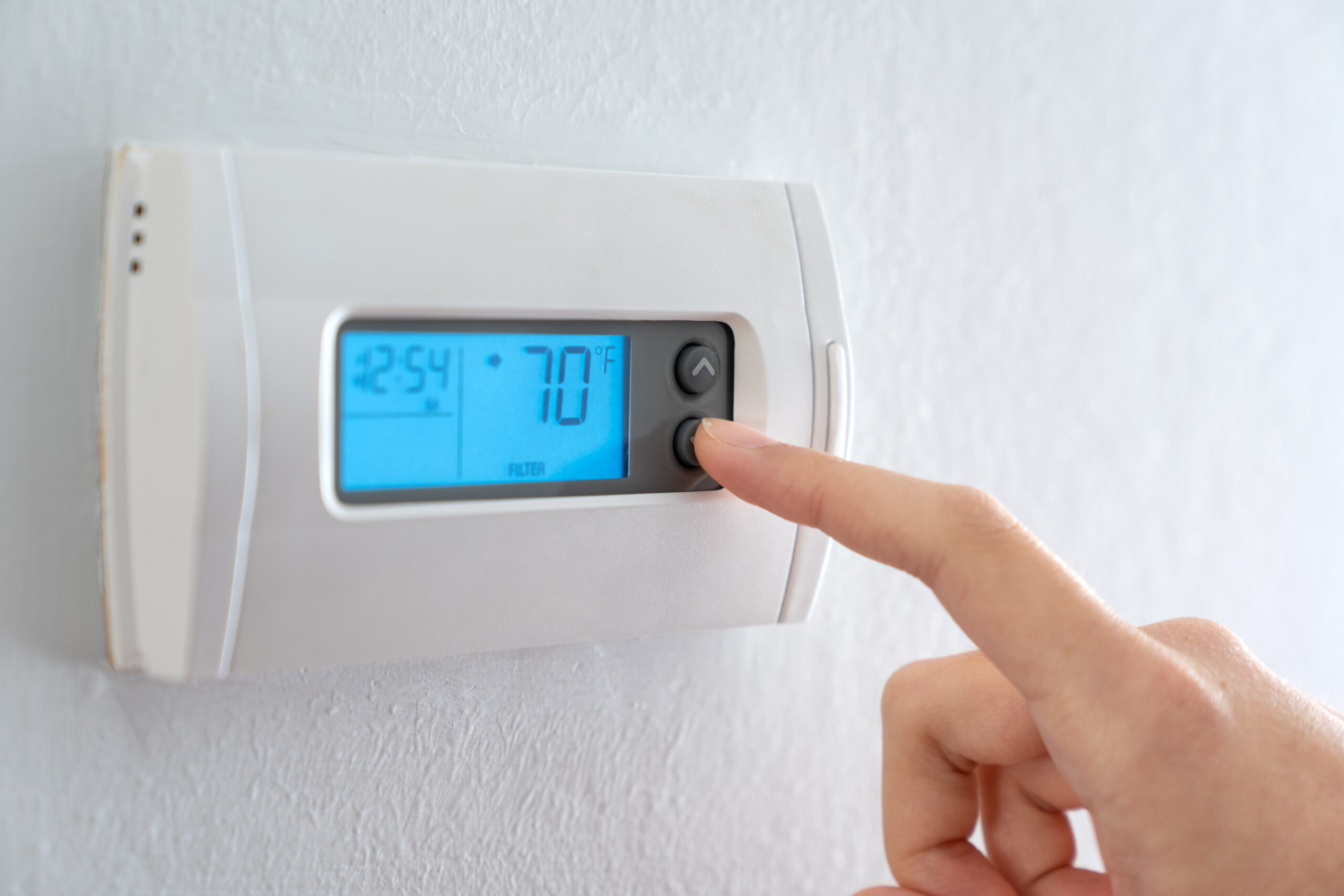
Hand press indoor room thermostat to lower the temp

When Should You Turn On Your Heat in Anchorage?

Most Anchorage homes turn the heat on in early-to-mid September, when overnight lows settle into the low

40s and indoor temperatures start dropping below 64°F. There is no prize for holding out longer, and there

is a real argument for turning it on earlier than you think, at least for one evening. Here is how to decide,

what it costs to run heat in the shoulder season, and the one September habit that prevents most October

no-heat calls.


The Simple Rule: Watch Your Indoor Temperature, Not the Calendar

When your home consistently sits below 64°F in the evening and does not recover on its own during the

day, it is time. In Anchorage that usually happens in the first two weeks of September, when average lows

hit 43°F and the first frost nights arrive. Homes with good south-facing sun and tight envelopes stretch a

week or two longer; older or shaded homes get there sooner. The calendar answer people search for is

September, but your thermometer is the honest referee.


Why Holding Out Doesn’t Really Save Money

The endurance contest of sweaters until October 1st saves less than most people expect.

Shoulder-season heating is cheap: your furnace runs a fraction of the hours it will in January, and a few

weeks of light September use is a rounding error on an Alaska winter heating bill. Meanwhile, letting the

house ride cold has costs of its own. Cold interior surfaces plus normal indoor moisture is how you get

condensation and mildew on exterior walls and window frames, a bigger problem in tight Alaska homes

than a few dollars of gas.


The September Test Run (Do This Even If You’re Not Cold Yet)

Here is the habit that prevents most of the emergency calls we run every October: pick a cool evening in

early September and run your heat for 20 to 30 minutes, before you need it. You are checking three things:

  • Does it start? Failed igniters and dirty flame sensors announce themselves on the first start of the season. This is the most common no-heat call we see every fall.
  • How does it smell? Burning dust for the first few minutes is normal and fades. A burning smell that persists, or anything electrical, is a shut-it-off-and-call situation.
  • How does it sound? Booming on ignition, grinding, or repeated short cycles are all September problems that become January emergencies.


If the test run raises any flags, a fall tune-up visit costs far less than the overtime emergency version.


What to Set It To

68°F while you are home and awake is the standard recommendation, and 60 to 65°F overnight or away

suits most households. Two Alaska-specific rules matter more than the exact number. First, never set an

Alaska home below 55°F, even when traveling, because that margin protects your pipes during a cold

snap. Second, avoid big daily swings with boilers and in-floor heat, which respond too slowly for

aggressive setbacks to pay off.


Frequently Asked Questions


Is it bad to turn the heat on and off in the fall?

No. Modern systems handle intermittent shoulder-season use fine. What actually causes trouble is the

opposite: a system that sat idle since April starting its first fire of the year unchecked in mid-October.


Why does my furnace smell when I first turn it on?

A summer’s worth of dust burning off the heat exchanger. It should fade within an hour. A persistent

burning or electrical smell, or any rotten-egg gas odor, means shut it down and call.


What if I turn it on and nothing happens?

Check the thermostat batteries, the furnace switch (it looks like a light switch, often near the unit), and your

breaker panel first. Those three solve a surprising share of “dead furnace” calls. After that, it is technician

territory, and in September you will get a same-week appointment instead of a same-month one.


Should renters and landlords handle this differently?

Landlords: the September test run on every unit is the cheapest insurance you will buy all year. Renters:

report weak or strange-behaving heat in September, while it is a maintenance item and not an emergency.


Turn It On This Week, Then Tell Us What You Heard

Do not wait for the cold to make the decision for you. Pick a cool evening this week, run your heat for 20 to

30 minutes, and pay attention to how it starts, smells, and sounds. If anything about it seems off,

September is the month to deal with it, while you still have your pick of appointments and no one is going

without heat. KLEBS has been keeping Alaskans safe and warm since 1986. Call (907) 365-2500 in

Anchorage or (907) 357-HEAT (4328) in the Mat-Su Valley, or send us a service request online.

Fall in Alaska

The Alaska Homeowner’s Fall Checklist: 12 Things to Do Before Freeze-Up

In Anchorage, the window between the kids going back to school and the first hard freeze is about six
weeks, and it is the only comfortable time of year to get your home ready for the seven months of winter
that follow. Here is the checklist our technicians would run on their own homes, in the order it should
happen: late August for scheduling and outdoor work, September for your heating system, and early
October for the final freeze-up items.

Late August: Schedule and Outdoor Work

  • Book your furnace or boiler tune-up now
    Not because we sell them, but because October is when every heating company’s schedule fills with
    no-heat emergencies, and maintenance appointments get pushed weeks out. Booking in August means
    you pick the date, and if the technician finds a failing part, you fix it before you need the heat.
  • Disconnect garden hoses and winterize outdoor faucets
    The single most common preventable plumbing failure we see every spring starts with a hose left
    connected in the fall. Water trapped in the hose bib freezes, splits the pipe inside your wall, and the leak
    does not show up until you use the faucet next summer. Disconnect hoses, drain them, and shut the
    interior valve to each outdoor faucet if your home has one.
  • Clean gutters and check grading
    Fall leaves plus an early freeze equals ice dams and foundation water. Clear gutters after the leaves drop
    and make sure downspouts discharge away from the foundation.
  • Check your heat tape and heat trace
    If your home relies on heat tape for exposed pipes, crawl spaces, or roof edges, plug it in and verify it
    warms before you need it. Heat tape fails quietly. You find out in January.

September: Your Heating System

  • Give your furnace a test run
    Pick a cool evening in early September and run the heat for 20 to 30 minutes. A dusty smell for the first few
    minutes is normal. Grinding, booming, short-cycling, or a burning smell that does not fade is not, and
    September is the right month to find that out.
  • Change your furnace filter and stock up
    Start the heating season with a fresh filter and buy enough to change it every one to three months through
    spring. A loaded filter makes your furnace work harder for the next 200 days straight.
  • Test smoke and carbon monoxide detectors
    Combustion season is CO season. Test every detector, replace batteries, and check the manufacture
    date. CO detectors expire after about seven years.
  • Service your water heater
    Incoming water in Anchorage gets colder through fall and winter, which makes your water heater work
    harder. Tankless units especially need annual descaling in our water conditions.

Early October: Final Freeze-Up Items

  • Know where your main water shutoff is
    If a pipe freezes and bursts, the difference between a mess and a disaster is measured in minutes. Every
    adult in the house should know where the main shutoff is and how to turn it.
  • Clear slow drains before the ground freezes
    A drain that runs slow in October tends to become a drain that stops in January, when exterior cleanout
    access is buried and frozen.
  • Seal obvious drafts
    Weatherstrip doors, close crawl space vents, and caulk gaps around penetrations. In a climate with a
    100-degree indoor-outdoor temperature swing, small leaks are real money.
  • Set your thermostat strategy
    68°F while home is the standard recommendation. Never set below 55°F in an Alaska home, even when
    traveling. That margin is what protects your pipes during a cold snap.

Frequently Asked Questions

Want the Heating Items Off Your Plate?

  • When is the first freeze in Anchorage?
    Anchorage typically sees its first freezing nights in September, with an average of three nights dipping to freezing that month, and hard freezes arriving in October. That is why this checklist starts in August: waiting until it is cold means you have already lost the easy window.
  • What is the single most important item on this list?
    If you do only two things: disconnect your hoses and get your heating system serviced. One prevents the most common plumbing failure we see; the other prevents the most expensive kind of winter emergency.
  • Do I need to do all of this every year?
    The heating and plumbing items, yes. Alaska equipment runs two to three times the hours of the same equipment in the Lower 48. Sealing and grading work lasts longer once done well.

KLEBS has been keeping Alaskans safe and warm since 1986. Call (907) 365-2500 in Anchorage or (907)
357-HEAT (4328) in the Mat-Su Valley, or send us a service request online. August and September
tune-up appointments go fast.