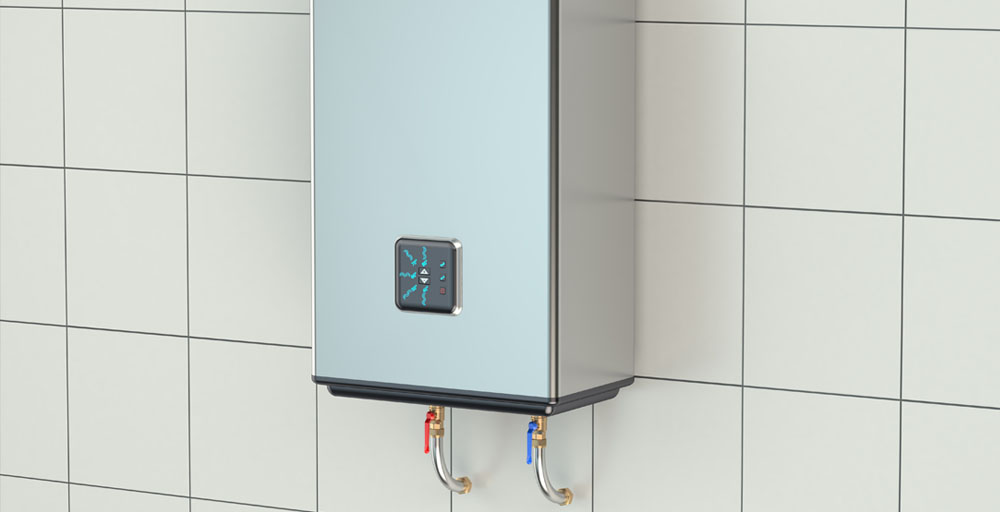
Tankless Water Heater Maintenance: What It Costs and What Happens If You Skip It
A professional tankless water heater service in Anchorage costs $175 to $300 and takes about an hour, right in line with the national range of $100 to $250 for a standard flush and inspection in 2026. Plan on once a year for most homes, and know this up front: most manufacturers require documented regular maintenance to keep the heat exchanger warranty valid, which can be a 12 to 15 year warranty on a quality unit. Skipping a $200 service to risk a $2,000 heat exchanger is the most expensive savings in plumbing.
Tankless heaters earned their reputation for lasting 15 to 20 years, roughly twice a tank. That number has fine print, and after 40 years of keeping Alaskans safe and warm across Anchorage, Wasilla, and the Mat-Su Valley, we can tell you the fine print is maintenance. Here is exactly what the service involves, what it costs, when you can do parts of it yourself, and the honest answer on who barely needs it.
What a Professional Tankless Service Includes
An annual tankless service is not a guy glancing at the unit and leaving a sticker. Done right, it covers descaling the heat exchanger by circulating a cleaning solution through the unit to dissolve mineral buildup, cleaning the inlet water filter, cleaning the air intake filter, inspecting the burner and ignition, checking gas pressure, inspecting venting from the unit to the exterior termination, checking the condensate line and neutralizer, and verifying error code history in the unit’s diagnostics.
Two of those items matter more in Alaska than anywhere the national articles are written. Vent terminations here take ice and snow loading, and a partially blocked termination will shut a unit down on the coldest morning of the year, which is precisely when it happens. And condensate lines can freeze if they were routed carelessly. A local service tech checks both because a local service tech has spent Februaries fixing both.
What It Costs: The Real Numbers
| Service | National 2026 | Anchorage |
| Annual flush and inspection | $100 to $250 | $175 to $300 |
| Descale only (DIY pump kit, parts) | $80 to $150 one time kit | Same, retail |
| Inlet filter cleaning | Included in service | Included in service |
| Neglect repair: heat exchanger replacement | $600 to $2,000+ | Varies by unit, quoted before work begins |
| Neglect repair: full unit replacement | $1,800 to $3,500 installed | $2,500 to $4,500 |
The bottom two rows are the argument. Scale buildup makes the unit work harder to hit temperature, raises your gas bill, throws error codes, and eventually cooks the heat exchanger. Every one of those failures costs multiples of the service that prevents it. See our guide to what a tankless costs installed if you want the full replacement math.
How Often Does Yours Actually Need Service?
The honest answer depends on your water, and this is where Anchorage differs from the national advice.
If you are on Anchorage municipal water, you have soft water, with hardness running around 80 milligrams per liter, which means scale builds slowly. Annual service is still the right rhythm because of the burner, venting, and filter items, but the descaling burden is lighter than what national hard water guidance assumes.
If you are on a private well in Eagle River, Chugiak, or the Mat-Su Valley, your water can carry more hardness and iron than the city supply. Well water homes should treat descaling as strictly annual, and some benefit from every six to nine months or from adding a scale filter or water treatment ahead of the unit. KLEBS handles water quality testing, filtration, and softening in house, so the diagnosis and the fix can come from the same visit. If your unit is throwing temperature fluctuation or flow errors between services, that is scale talking.
A useful rule from four decades of local service calls: the unit tells you. Falling hot water output, longer waits, and error codes between annual visits mean the interval is too long for your water.
What You Can DIY and What You Should Not
Homeowners can reasonably handle two items. Cleaning the inlet water filter takes ten minutes with the manual open, and many owners do it seasonally. Running a descaling flush with a pump kit and food grade descaler is within reach of a handy owner who follows the manufacturer procedure exactly, including isolating the unit with the service valves.
Leave the rest to a licensed tech. Gas pressure checks, burner work, venting inspection, and anything behind the cover on a gas appliance is not a video tutorial project. The failure modes include carbon monoxide, and no amount of savings prices that risk correctly. There is also the paperwork reality: DIY flushes may not satisfy the maintenance documentation your warranty requires. If you DIY the flush, keep dated receipts and records.
When You Can Skip the Service Call
If your tankless is under two years old, on municipal water, and running without a single error code, you are not overdue for anything except putting the first service on the calendar before winter. And if you are still deciding between a tank and a tankless, factor this in honestly. A tank heater needs less annual attention, and that simplicity is a legitimate point in its favor for some households. Our tankless cost guide covers that tradeoff without the sales gloss.
The Alaska Pre Winter Check
Whatever your service schedule, do these before freeze up every year: confirm the exterior vent termination is clear and undamaged, confirm the condensate drain runs and is protected from freezing, and if the unit is in a garage or semi conditioned space, verify its built in freeze protection has power at all times. A tankless with freeze protection still fails if the breaker feeding it gets switched off in a cold snap. We see it every winter.
Annual water heater service pairs naturally with a fall furnace tune up or boiler service. Our KLEBS Care program was built around that visit: every year we make sure your systems are working at peak performance, and members get service discounts, no overtime or weekend charges on emergency calls, emergency work at regular rates, and 10 percent off any parts or repairs needed. Ask us about putting your water heater on the same annual visit. One trip, one calendar reminder, and your whole mechanical room is ready for winter.
Questions about your unit, or ready to get the first service on the books before freeze up? Call the friendly experts at KLEBS. Anchorage: (907) 365-2500. Mat-Su: (907) 357-HEAT (4328). 24/7 emergency service available.
Frequently Asked Questions
How much does tankless water heater maintenance cost?
In Anchorage, plan on $175 to $300 per year for a professional flush and inspection, in line with the national 2026 range of $100 to $250. DIY descale kits run $80 to $150 for the pump setup, reusable in future years.
How often should a tankless water heater be flushed?
Once a year for most homes. On hard well water, every six to nine months. On soft municipal water, annual service still applies for burner, filter, and venting checks even though scale builds slowly.
What happens if you never flush a tankless water heater?
Scale coats the heat exchanger, efficiency drops, error codes appear, and the exchanger eventually fails. Full unit replacement runs $2,500 to $4,500 in Anchorage, and skipped maintenance can void the warranty that would have covered the repair.
Can I service a tankless water heater myself?
You can clean the inlet filter and run a descaling flush if you follow the manufacturer’s procedure exactly. Gas, burner, and venting work belongs with a licensed technician.
How long will a tankless water heater last?
15 to 20 years with regular maintenance is a fair expectation for a quality unit, roughly double a tank heater. Without maintenance, expect years off that number.